
ROLES
UX Research
System Design
Interaction Design
Prototyping
User Testing.
NOTE: not visual design
SCOPE
Work within a three-person interdisciplinary team to investigate student employment and redesign the experience of connecting students with employers seeking temporary, part-time, and project-based talent.
OUTCOME
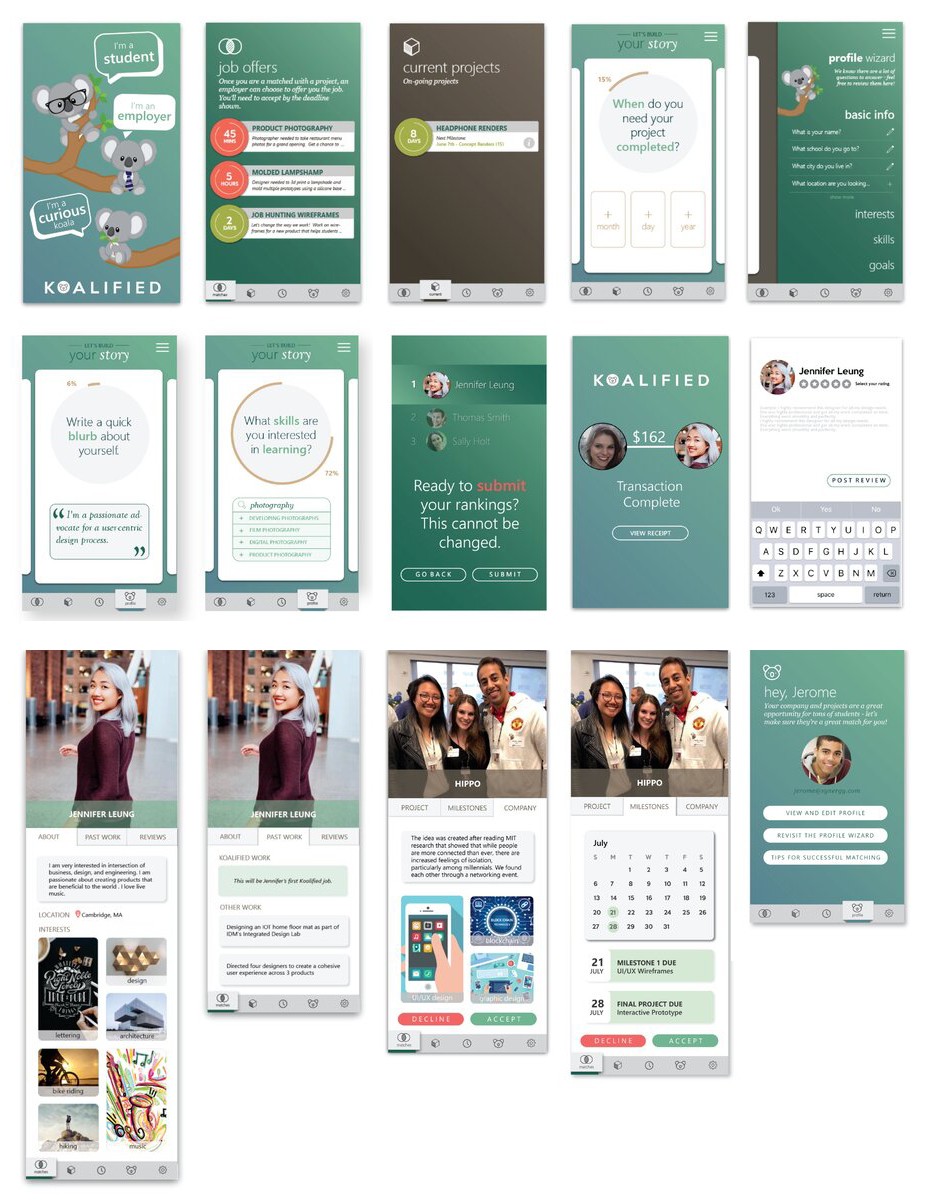
Developed and tested an interactive mobile prototype built around a new hiring workflow, replacing traditional applications and résumé searches with skill-based matching and direct offers.
The two sides of a broken hiring experience
Traditional hiring creates friction for everyone involved. Students spend hours searching for opportunities, submitting applications, and waiting for responses with little understanding of their chances.
Employers spend just as much time posting positions, reviewing résumés, and filtering candidates to find the right skills.
Both sides are looking for a good match, yet the process requires enormous effort before either knows whether one exists. What if we eliminated the search altogether?

01 / Different students, different motivations
Through qualitative research, we investigated how students approached temporary, part-time, and project-based employment.
We developed three personas representing different motivations, priorities, and constraints. Some students needed income. Others wanted professional experience, flexible schedules, or opportunities to explore new interests. Despite these differences, they shared a common frustration: finding relevant work required too much time and uncertainty.
These insights helped us identify what a better experience needed to accomplish—not simply make applications easier, but make them unnecessary.


02 / Rethinking the system
Rather than improving individual steps in the hiring process, we mapped the ideal experience for both students and employers.
This revealed an opportunity to change the sequence of interactions entirely.
Instead of requiring students to search and apply, we designed a system where employers define their needs, students communicate their skills and availability, and the platform brings compatible opportunities and people together. Employers could evaluate relevant matches and extend offers directly. Students could consider opportunities without repeatedly searching, applying, or submitting résumés.
By changing the order of the process, we transformed hiring from a filtering problem into a matching opportunity.

03 / Creating value for both sides
The redesigned workflow created distinct advantages for both participants.
For students, it reduced the effort of finding relevant work, allowing opportunities to emerge from their skills, interests, and availability.
For employers, it replaced broad searches and résumé filtering with a more targeted way to discover potential candidates.
The challenge was designing an experience that balanced both sides: enough information to establish confidence in a match, without recreating the complexity we were trying to eliminate.
That balance became the foundation of Koalified's interaction model.


04 / Designing the experience
With the marketplace model established, we moved into wireframing and prototyping. We explored how students could communicate their capabilities, discover compatible opportunities, and respond to offers with minimal effort.
For employers, we designed ways to define job requirements, evaluate matches, and initiate relationships with potential candidates. Through iterative prototypes and testing with students and employers, we refined the workflows and examined how well the interface supported our proposed system.
The goal wasn't to create another job board. It was to make an unfamiliar hiring model feel simple and natural.



Outcome
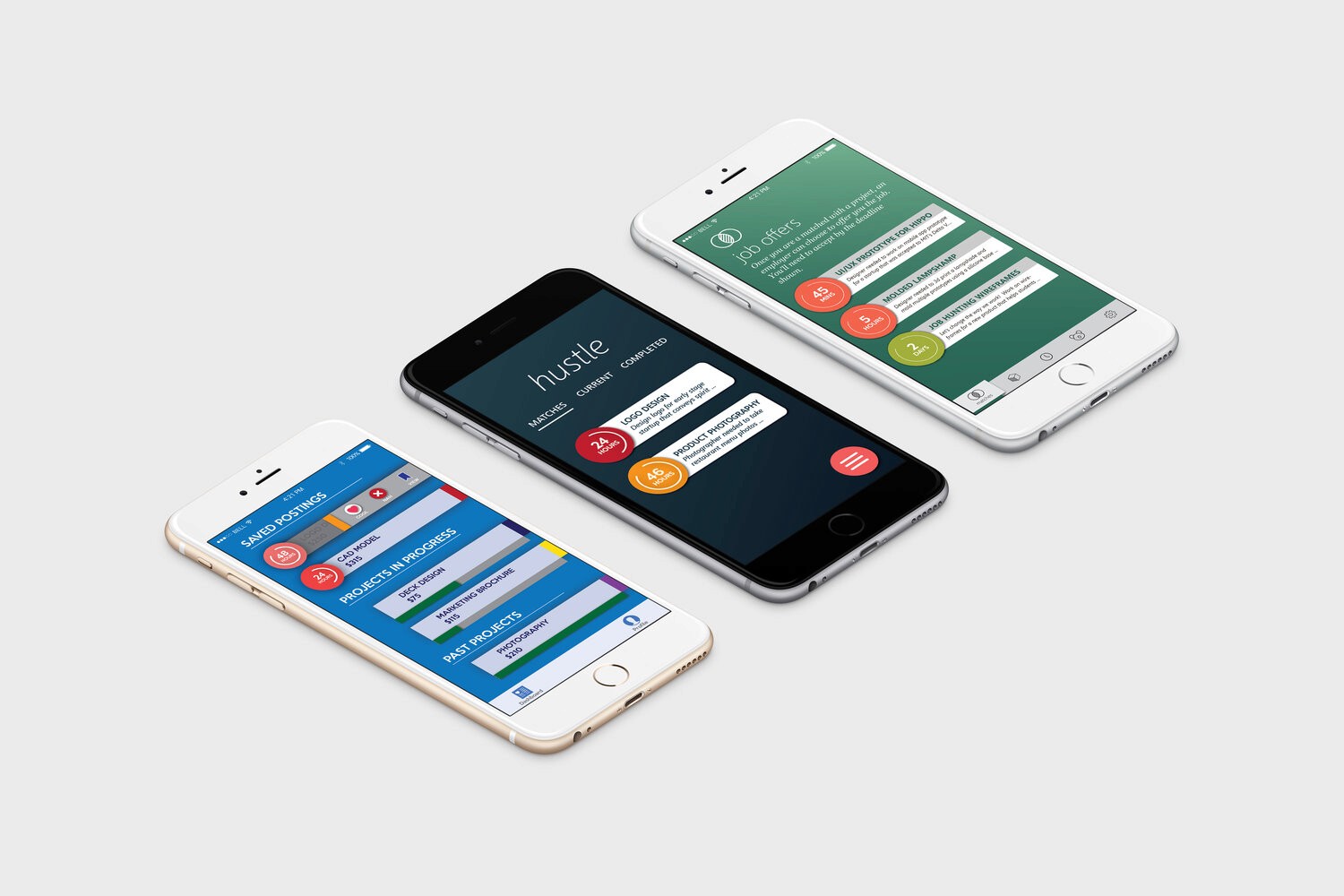
Koalified culminated in an interactive mobile prototype demonstrating a fundamentally different approach to short-term hiring. Through research, systems mapping, and iterative design, we developed a two-sided experience that could connect students and employers without relying on conventional job applications or résumé searches.
While polished visual design was outside the project's scope, the prototype demonstrated how rethinking the underlying workflow could simplify the experience for both sides of a marketplace.

Learnings
Koalified reinforced an important lesson about experience design: improving a process doesn't always mean making its existing steps easier.
Sometimes the greatest opportunity comes from questioning whether those steps need to exist at all.
The most meaningful innovation wasn't a new way to search for jobs. It was designing a system where searching was no longer necessary.