
SCOPE & OUTCOME
This initiative reimagined the traditional hiring process by redesigning the underlying marketplace model. Through interviews, prototyping, and testing with students and employers, we explored a system that matched candidates and opportunities without requiring applications, resumes, or job searches. We discovered that changing the order of a single step transformed hiring from a filtering problem to a matching opportunity.
MY ROLE
Contributed across research, systems mapping, workflow design, concept development, prototyping, and user testing as part of a three-person interdisciplinary team.
THE PROBLEM

THE PERSONAS
We identified three primary personas through immersive qualitative research of students in need of contract, part-time, and short-term work.


WE MAPPED OUT THE IDEAL EXPERIENCE
The main point of innovation came about when we framed the ideal experience for each persona. Looking at the experience as a system, we were able to re-order key components of the experience to eliminate the need of applying for jobs (and for employers, the process of sorting through candidates).

❤️ VALUE FOR BOTH STUDENTS AND EMPLOYERS
Our new experience system allowed for real innovation for both students and employers. You can think of it as matching rather than searching/evaluating.


WIREFRAME SKETCHES
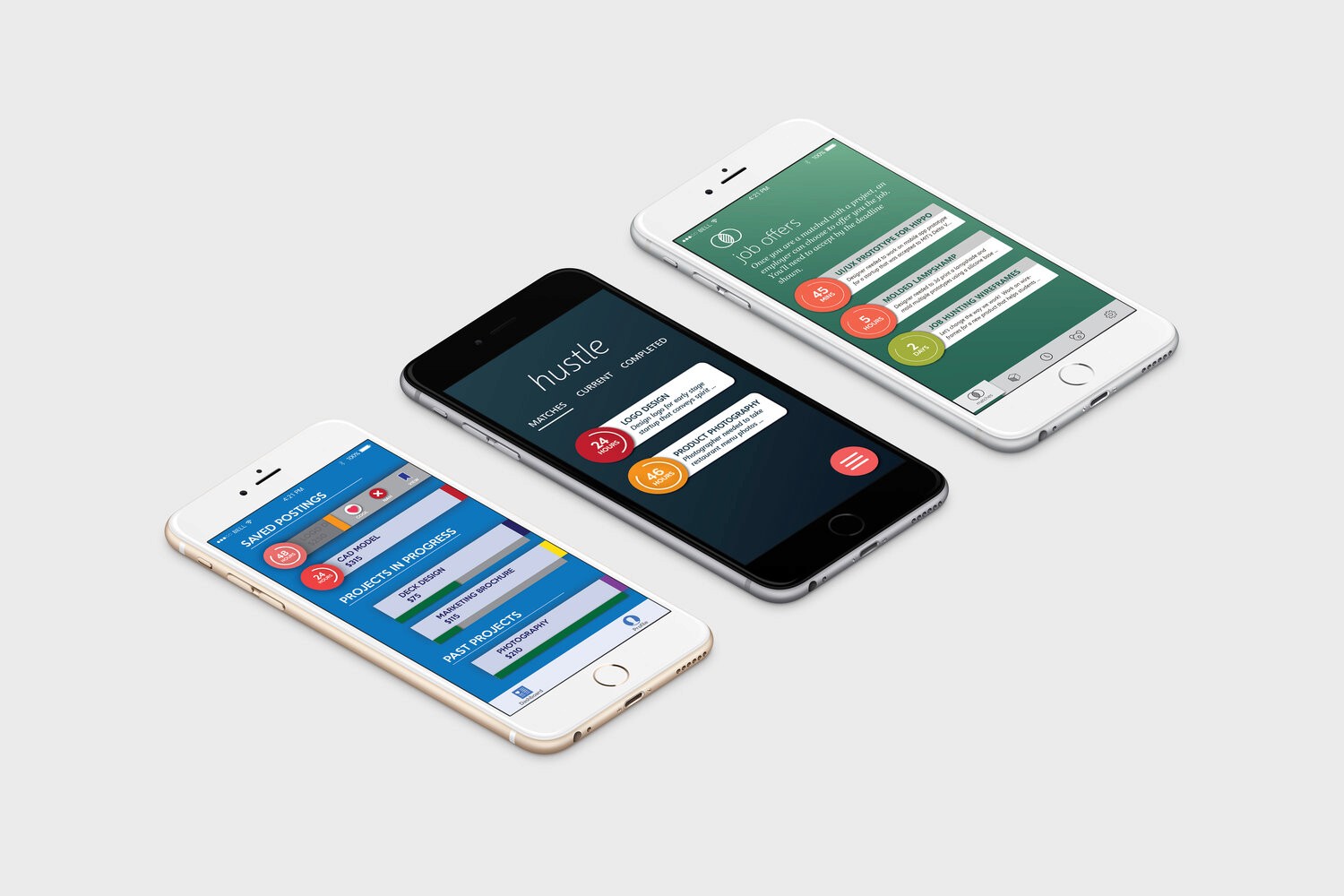
Next in the scope of the project was to translate this experience system into a looks-like prototype. Step 1, of course, was wireframing.


WIREFRAME ITERATIONS
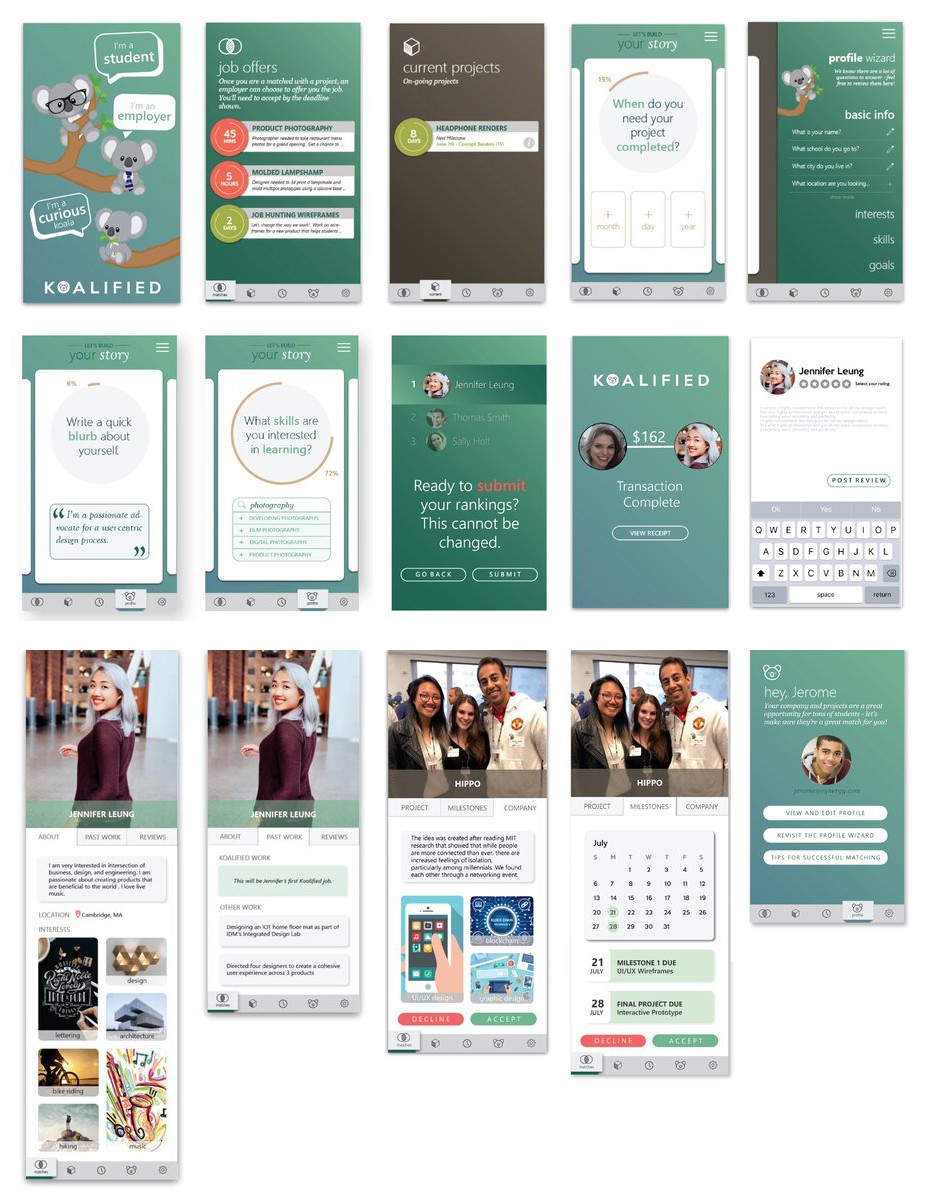
We used Invision to prototype a number of screens, co-design on UX workflows while testing with students and employers throughout.
NOTE: FULL VISUAL DESIGN WAS OUT OF SCOPE FOR THIS PROJECT, though visual themes were explored for branding purposes.