
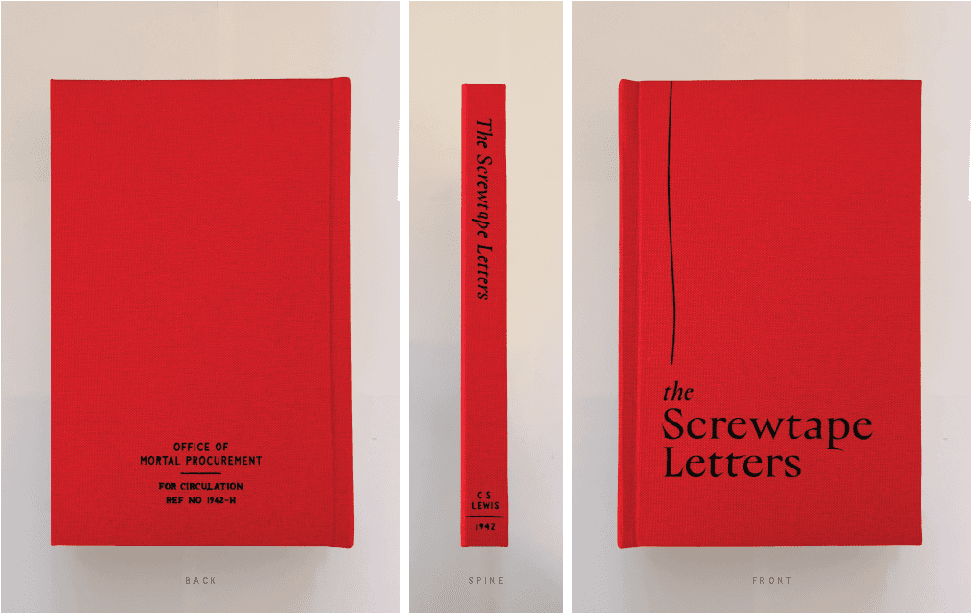
THE SCREWTAPE LETTERS CS LEWIS
The design leans into restraint and bureaucracy rather than overt illustration. On the front, a typeface that appears traditional at first begins to distort on closer inspection — terminals sharpen slightly too far, a serif drifts downward, and a “t” taps suggestively on the shoulder of the letter beside it. A broken puppet string suggests both manipulation and triumph, while the back evokes an elevated office memo, reflecting Lewis’s depiction of Hell not as chaos, but as a well-oiled machine.
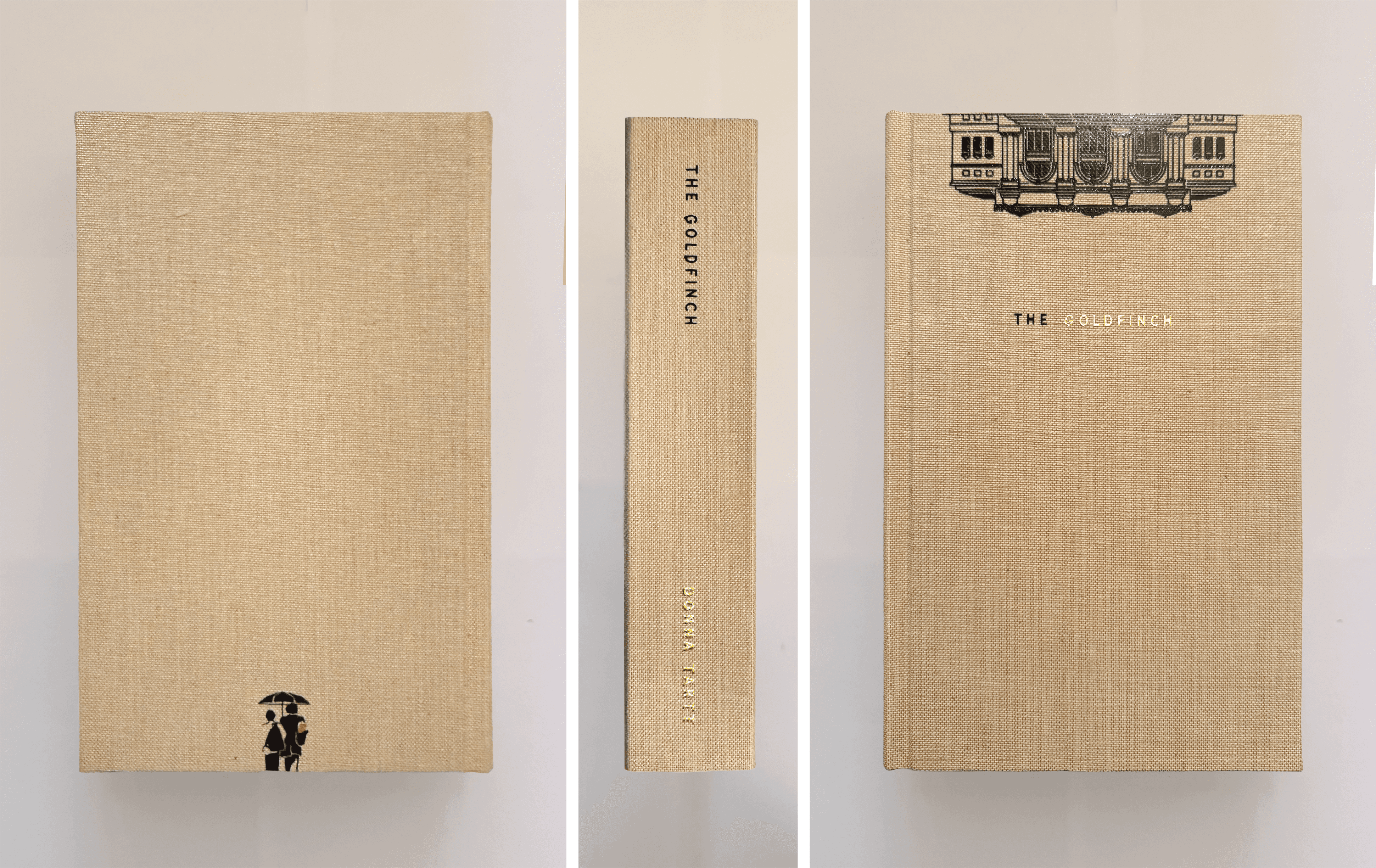
THE GOLDFINCH DONNA TARTT
The rough woven cloth and gold foil title create the feeling of something precious carried in the wrong container, echoing the journey of the painting throughout the novel. An inverted Metropolitan Museum facade acts as a haunting distress signal — art and life turned upside down. The back shows Boris and Theo beneath an umbrella in the desert, a small gold rectangle visible inside Boris’s backpack - if you've read the book, you know what he's taken. Handmade floral endpapers echo the warm tones of Fabritius’s painting, making the book itself feel like a carefully wrapped secret.
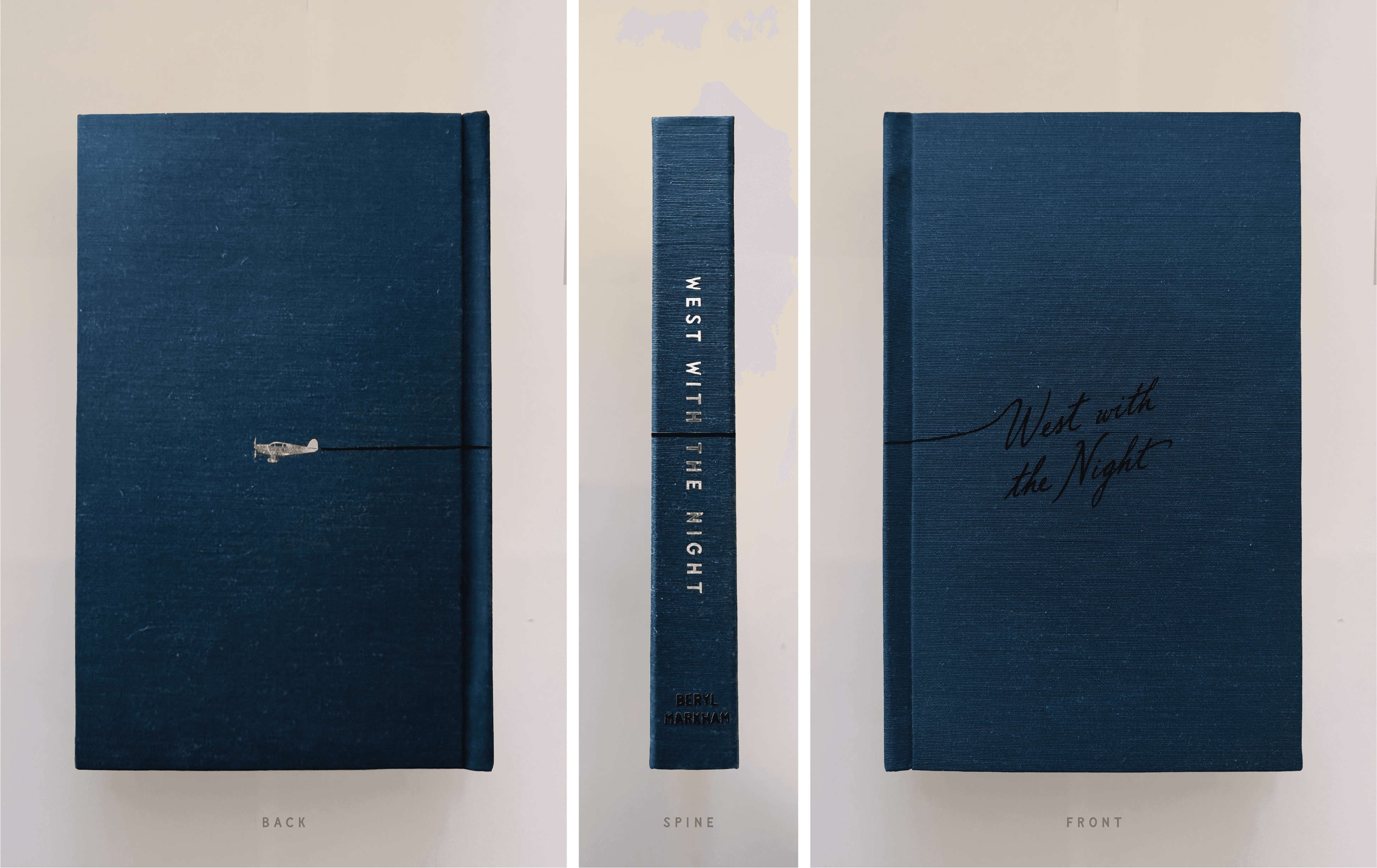
WEST WITH THE NIGHT BERYL MARKHAM
The deep blue cloth and black foil typography evoke the feeling of flying through darkness, while the horizontal grain subtly suggests motion through the night sky itself. A single uninterrupted line wraps around the cover — beginning as the trail behind Markham’s plane before becoming the title — reflecting both the physical journey and the singular determination that carried her westward against convention.

A CLOCKWORK ORANGE ANTHONY BURGESS
The deep blue cloth and black foil typography evoke the feeling of flying through darkness, while the horizontal grain subtly suggests motion through the night sky itself. A single uninterrupted line wraps around the cover — beginning as the trail behind Markham’s plane before becoming the title — reflecting both the physical journey and the singular determination that carried her westward against convention.
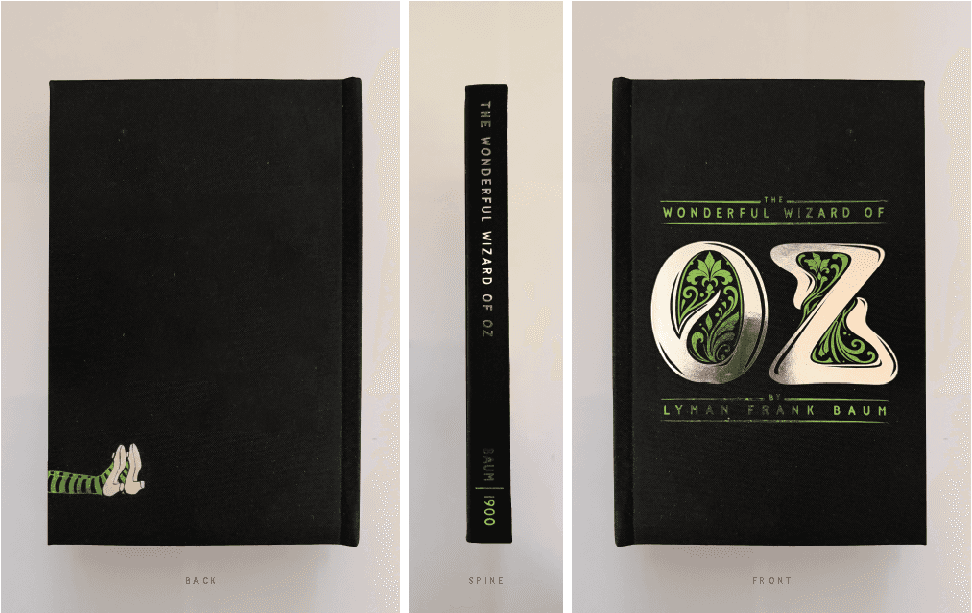
THE WONDERFUL WIZARD OF OZ L FRANK BAUM
Inspired by the bold optimism and decorative typography of early Art Nouveau poster design, the front cover treats Oz as something adventurous, theatrical, and larger than life. Bright green foil and oversized lettering aim to capture the feeling of stepping into a world that is both magical and slightly overwhelming. On the back, only the witch’s striped stockings and silver slippers remain — a quiet visual punchline that speaks to something darker: Dorothy's first, fateful, and fatal encounter with the land of Oz.
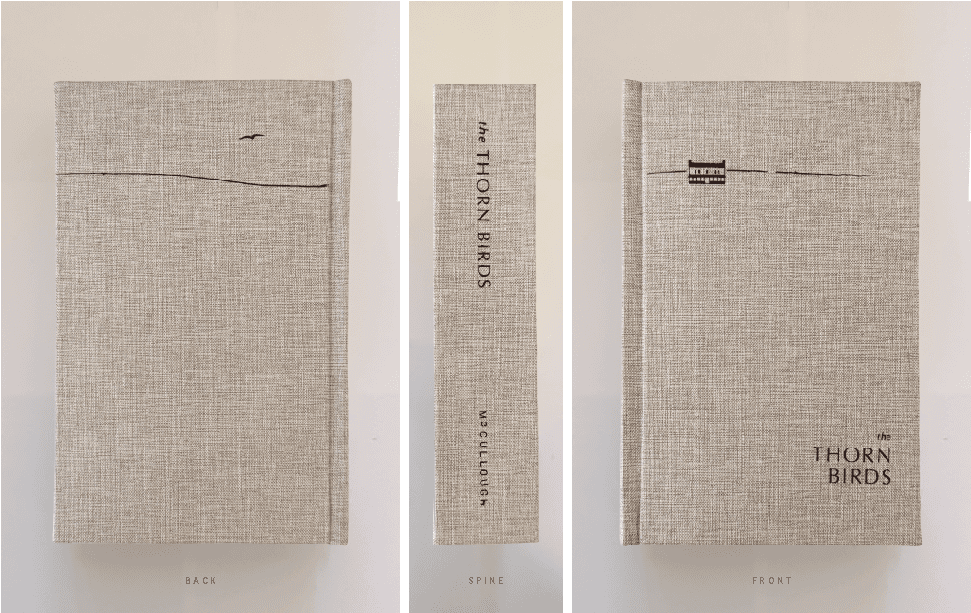
THE THORN BIRDS COLLEEN McCULLOUGH
Designed around isolation, distance, and emotional scale, the cover uses sparse horizon lines and tiny interruptions to let negative space carry the emotional weight of the story. A bird in flight on the back and a distant homestead on the front are connected by the same uninterrupted line — love, faith, longing, and sacrifice tied together across impossible distance. The rough undyed linen and restrained bronze foil keep the object grounded in the dry physicality of the landscape itself, feeling weathered, rather than decorated.
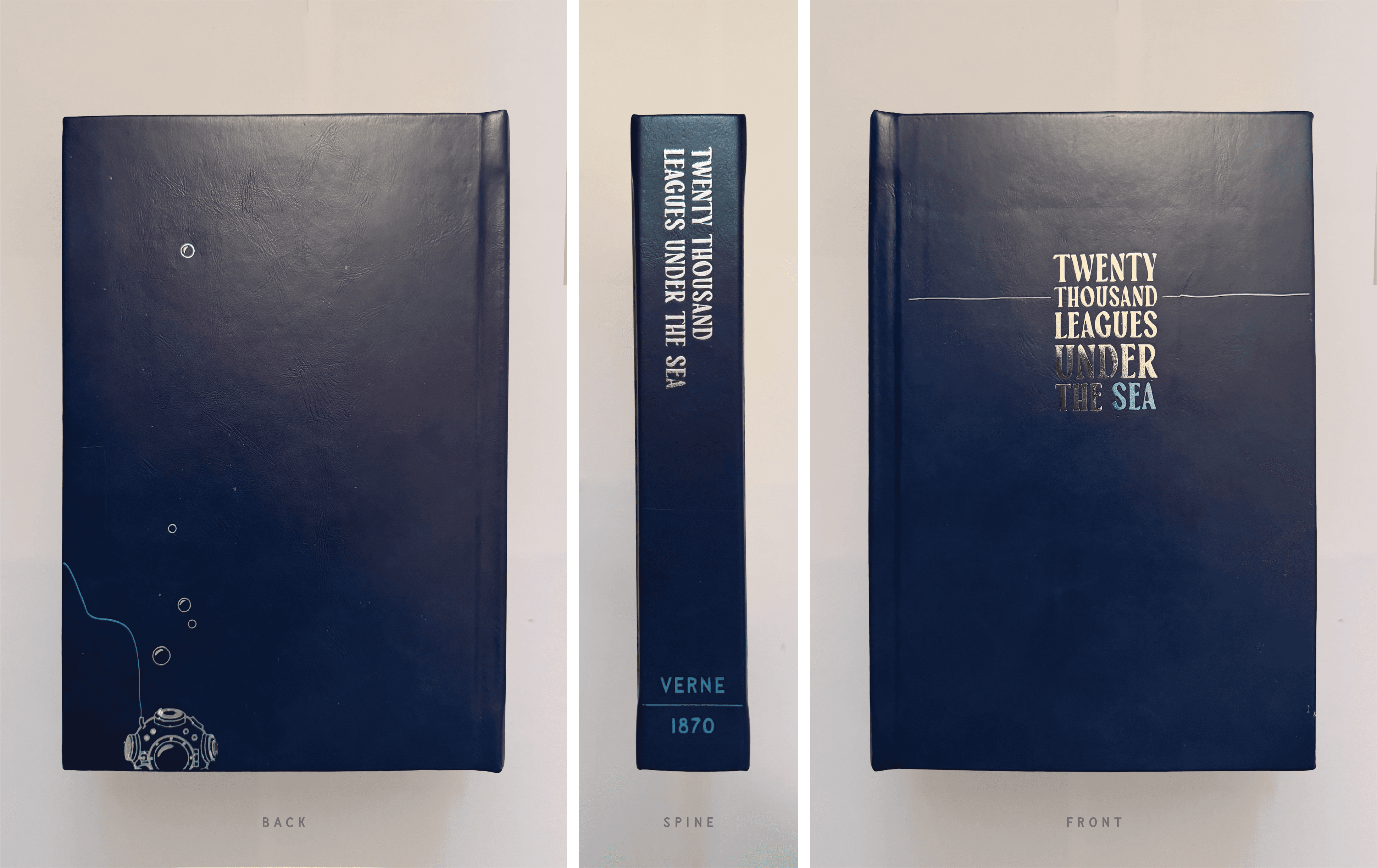
20,000 LEAGUES UNDER THE SEA JULES VERNE
Designed to feel submerged rather than illustrated, the deep blue binding uses sparse bubbles, pressure gradients, and two-tone metallic typography to evoke the quiet vastness of open water. A single ruled line crosses the front cover like the ocean’s surface — the title peeking just above it. Like an iceberg, the bulk of the story lies beneath. On the back, a lone Victorian diver descends into the depths, while silver foil and embossed endpapers carry the language of water, pressure, and movement into the interior. Nemo’s motto, “Mobilis in mobili” — moving within the moving — becomes both the philosophy of the Nautilus and the guiding principle of the design itself.
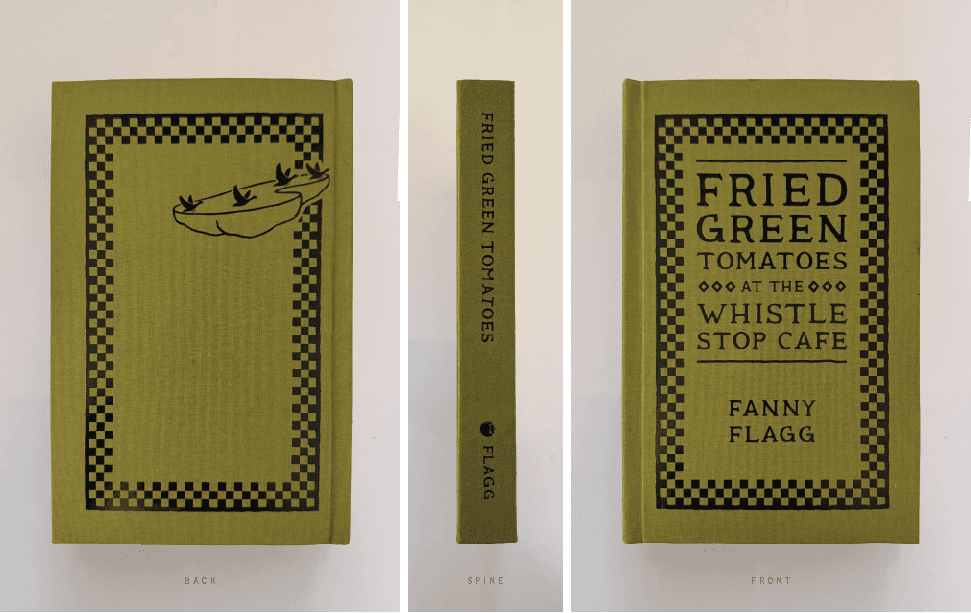
FRIED GREEN TOMATOES FANNY FLAGG
Designed to evoke the warmth and familiarity of a roadside diner menu or inherited community cookbook, the cover leans fully into its Southern vernacular aesthetic — checkerboard borders and hand-painted typography. The back shows a frozen lake being carried out of frame by geese: Idgie’s tall tale rendered with complete sincerity against the otherwise grounded diner motif. Inside, the endpaper reads “Secret’s in the sauce,” which feels charming at first… until you remember what’s in it.
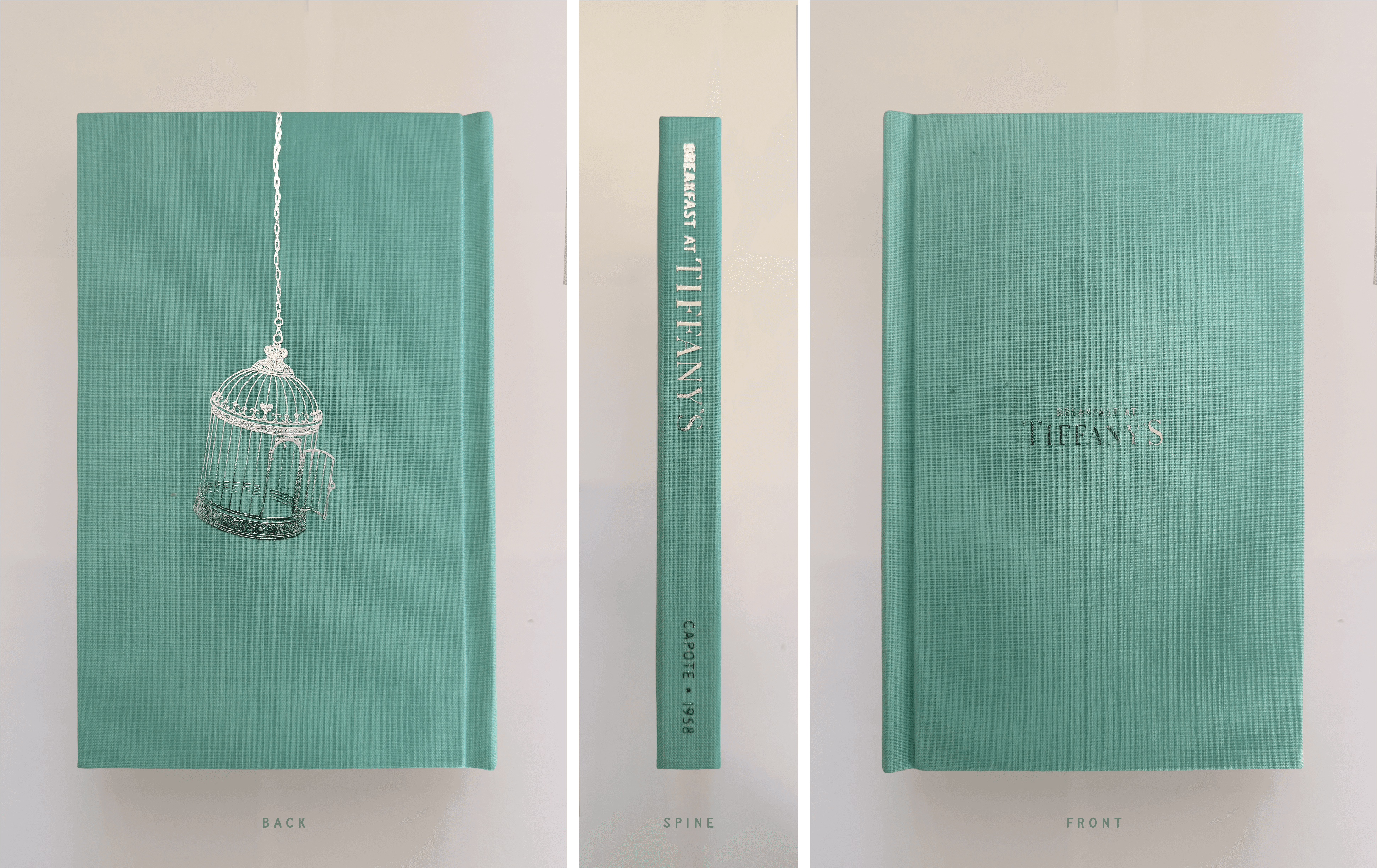
BREAKFAST AT TIFFANY'S TRUMAN CAPOTE
Designed to feel simple, elegant, and unmistakably tied to the visual language of an iconic brand, the cover relies on restrained typography, silver foil, and the signature robin’s-egg blue cloth rather than overt illustration. On the back, a birdless cage hangs suspended in silver foil — a quiet reference to Holly Golightly’s belief that no one belongs to anyone.
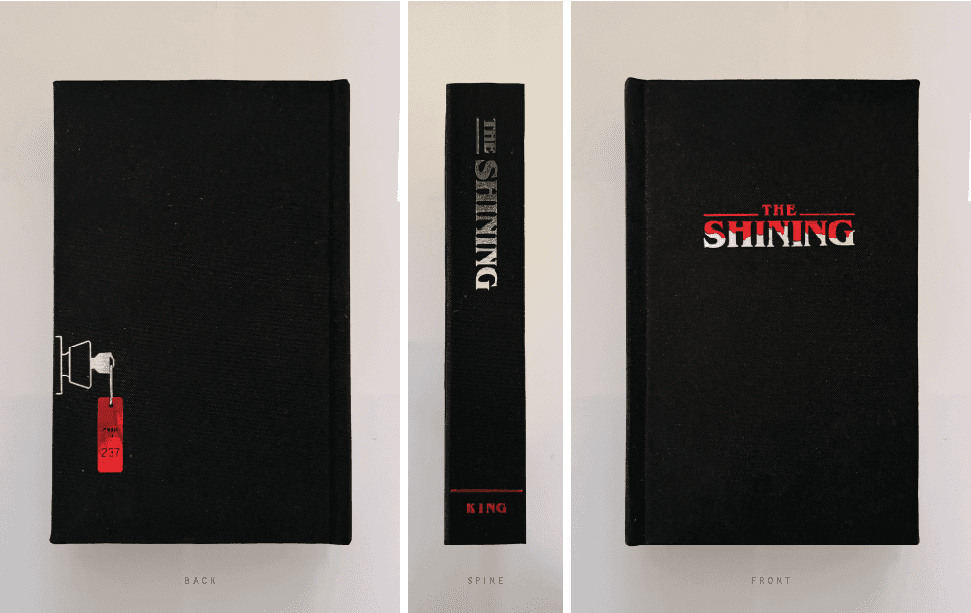
THE SHINING STEPHEN KING
Rather than illustrating horror directly, the design treats the hotel like a vessel slowly filling with dread. The title is layered in silver and red foil so the letters subtly bleed without ever depicting blood directly, creating tension through implication rather than spectacle. On the back, Room 237’s key hangs alone with its red tag — small, specific, and quietly horrifying to anyone who has read the book.
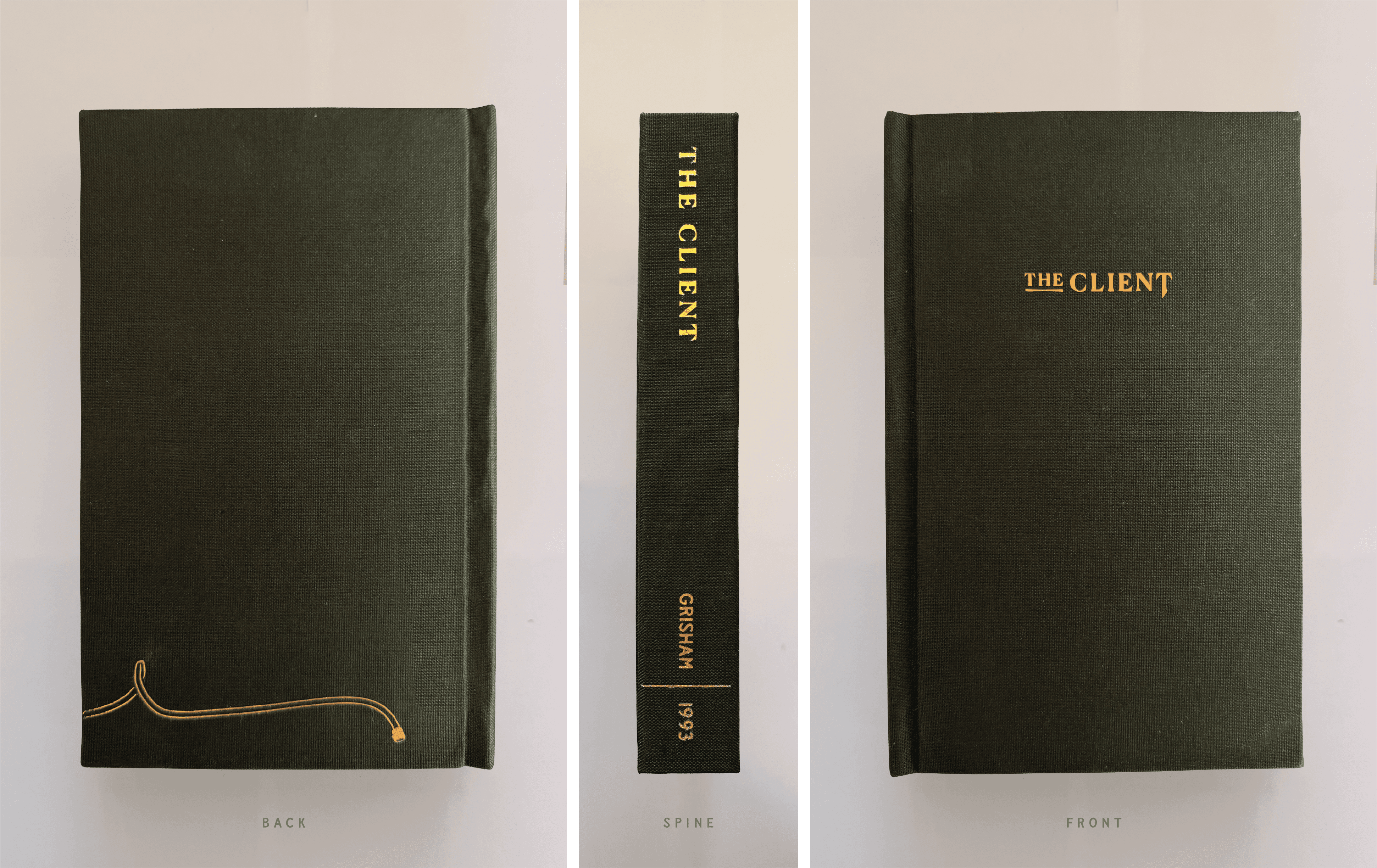
THE CLIENT JOHN GRISHAM
Designed to evoke the restrained formality of a legal thriller, the cover pairs deep green cloth with simple gold foil typography — while a knife-like T hints at something more dangerous to come. On the back, a decorative garden hose initially reads as light-hearted summer ornamentation, but reveals something much darker once you know the story.
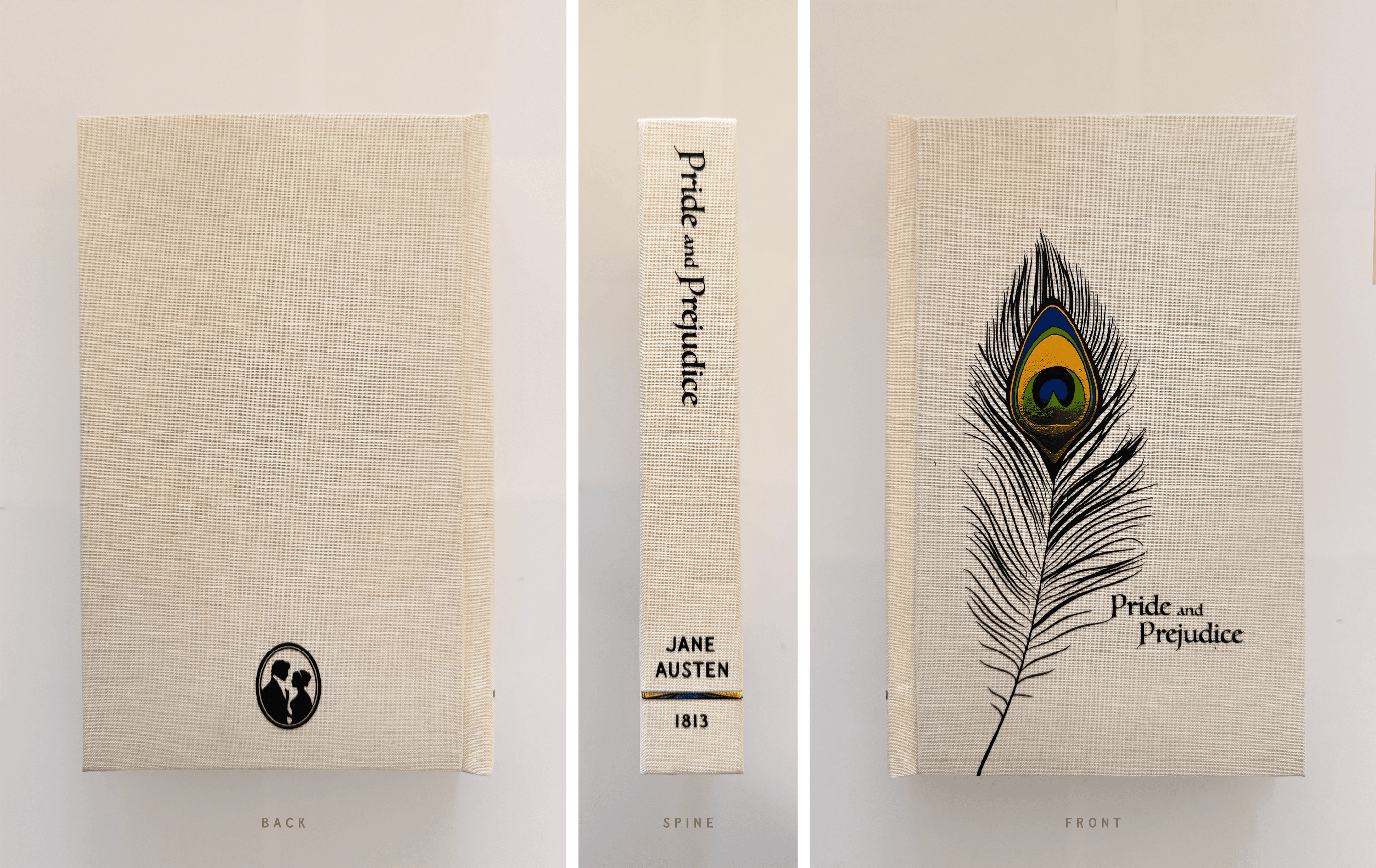
PRIDE AND PREJUDICE JANE AUSTEN
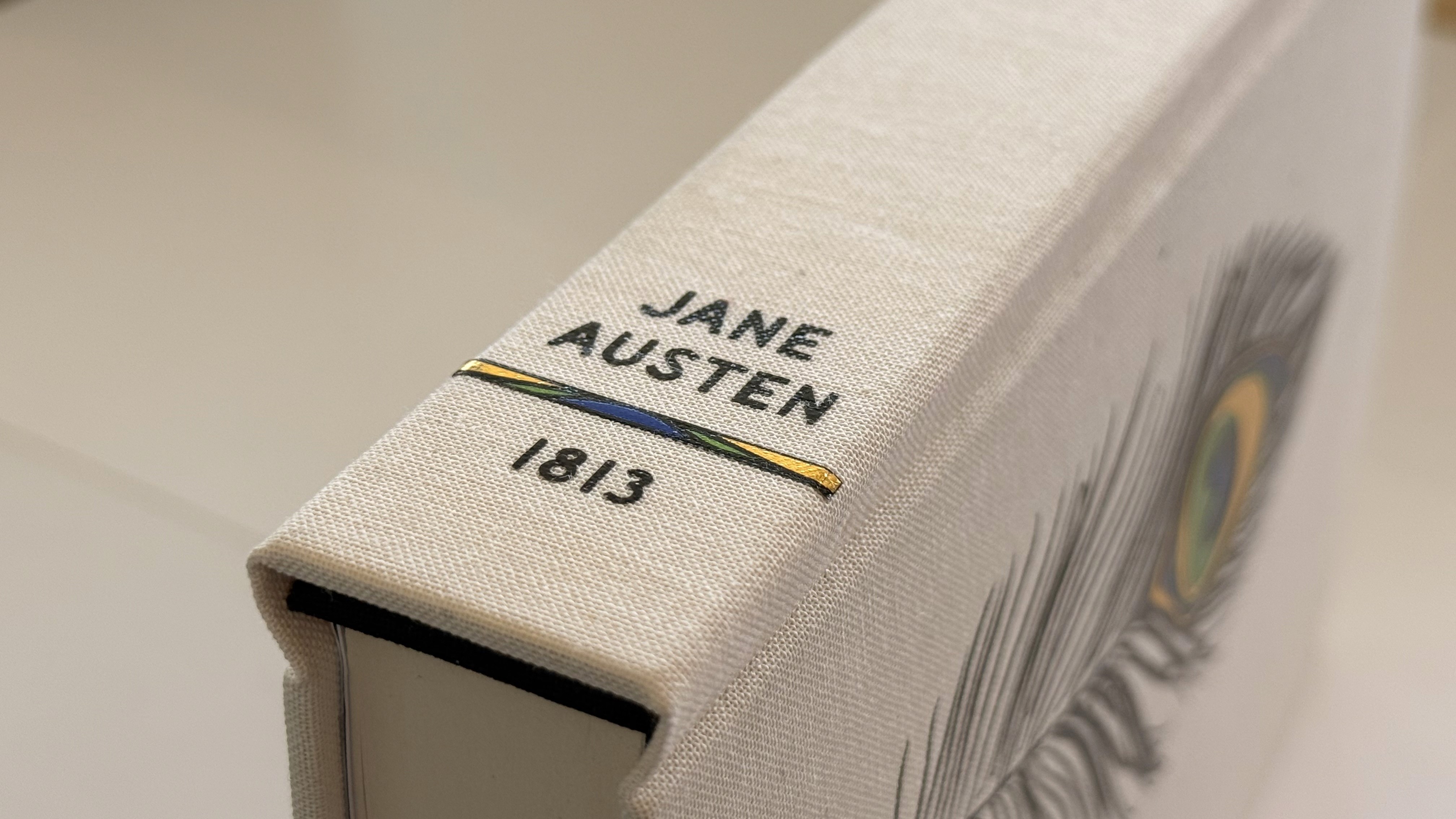
Centered around a classic peacock feather motif, the design relies on the jewel-like quality of layered foil inlays to transform the cover itself into a treasured object. Gold, blue, green, and black foils catch light differently across the feather, creating subtle shifts in depth and color as the book moves in the hand. That same jeweled detailing reappears in the thin dividing line on the spine — a small ornamental moment intended to give the entire object an heirloom-like sense of refinement.
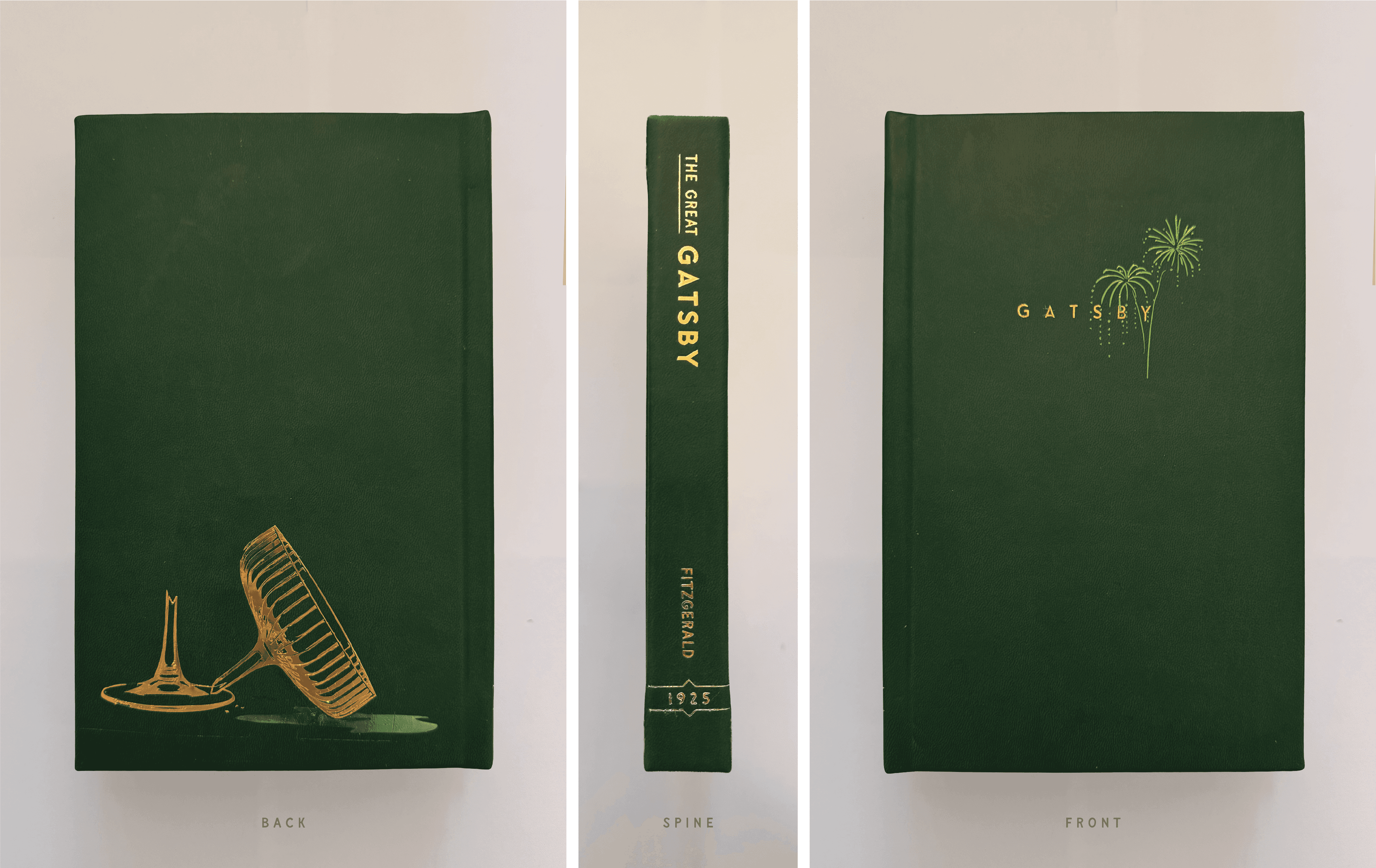
THE GREAT GATSBY F SCOTT FITZGERALD
A restrained green leather binding built around the emotional aftermath of excess. Fireworks flicker quietly on the front while a toppled champagne coupe on the back reframes the story as one of loneliness, longing, and the residue left behind after spectacle fades.
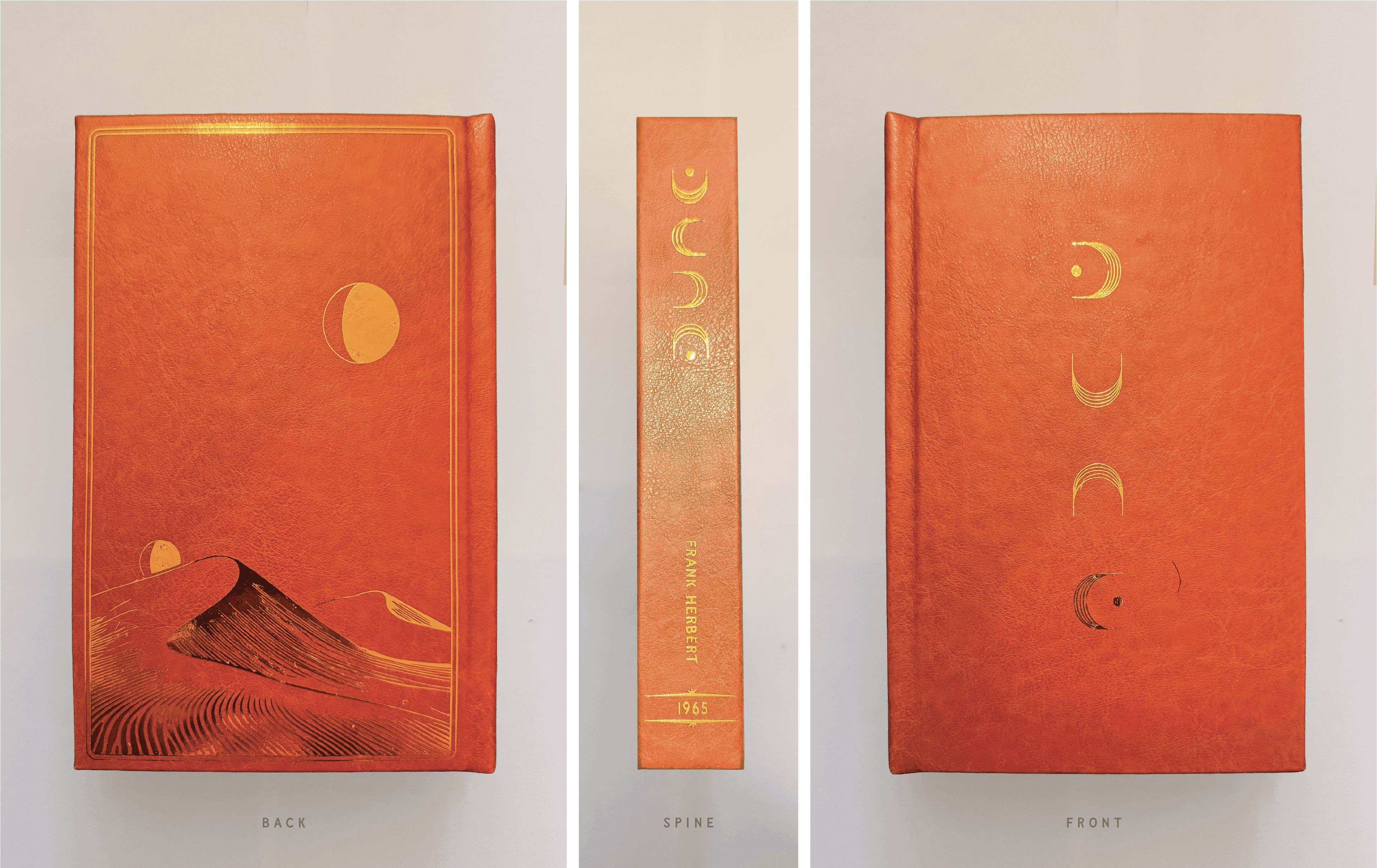
DUNE FRANK HERBERT
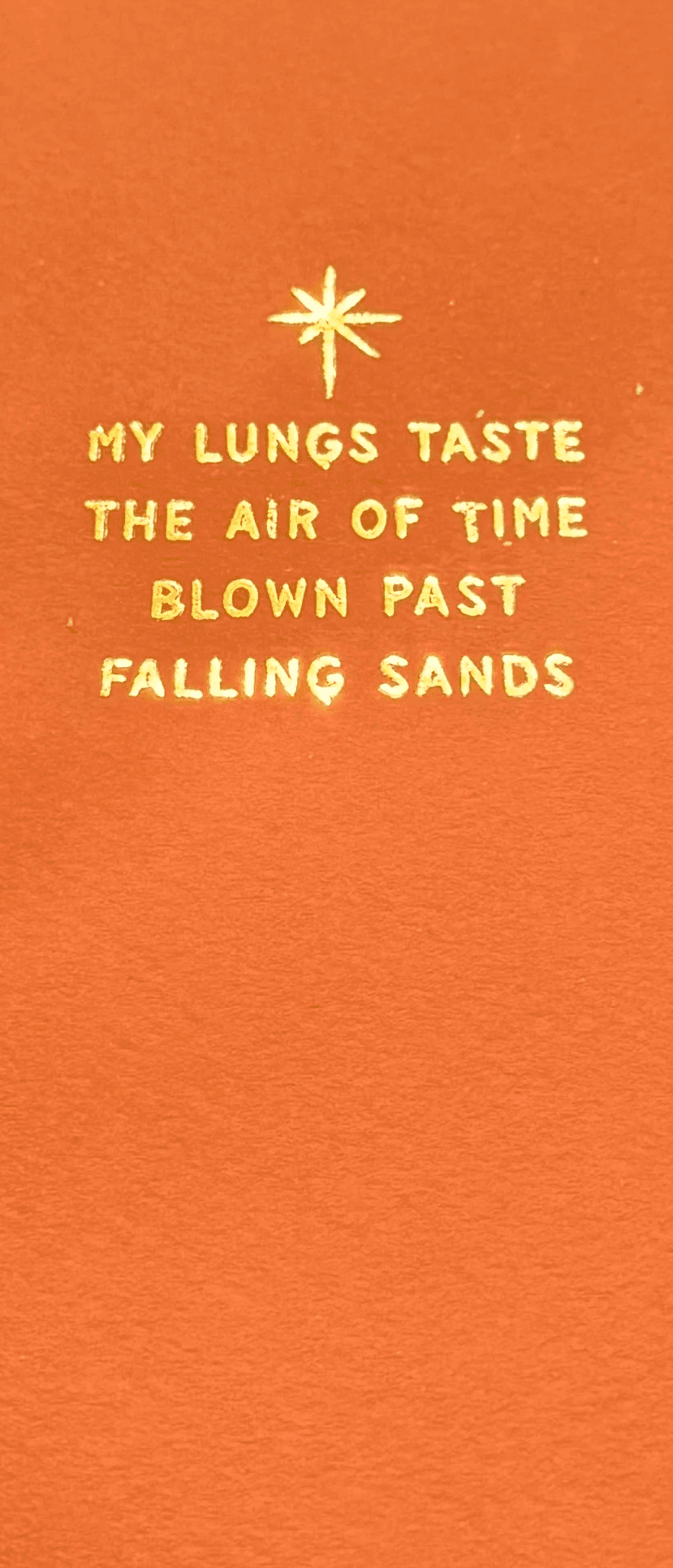
The design treats Arrakis less as a setting and more as a force — vast, ancient, and almost spiritual. Heavy materiality, sparse composition, and controlled geometric foil work evoke something both futuristic and weathered, as though the symbols on the cover are polished glyphs pulled from an ancient desert civilization, the same form rotated ninety degrees to construct the letterforms themselves. The restraint of the composition aims to make the object itself feel mythic, like an artifact recovered rather than a story merely printed.
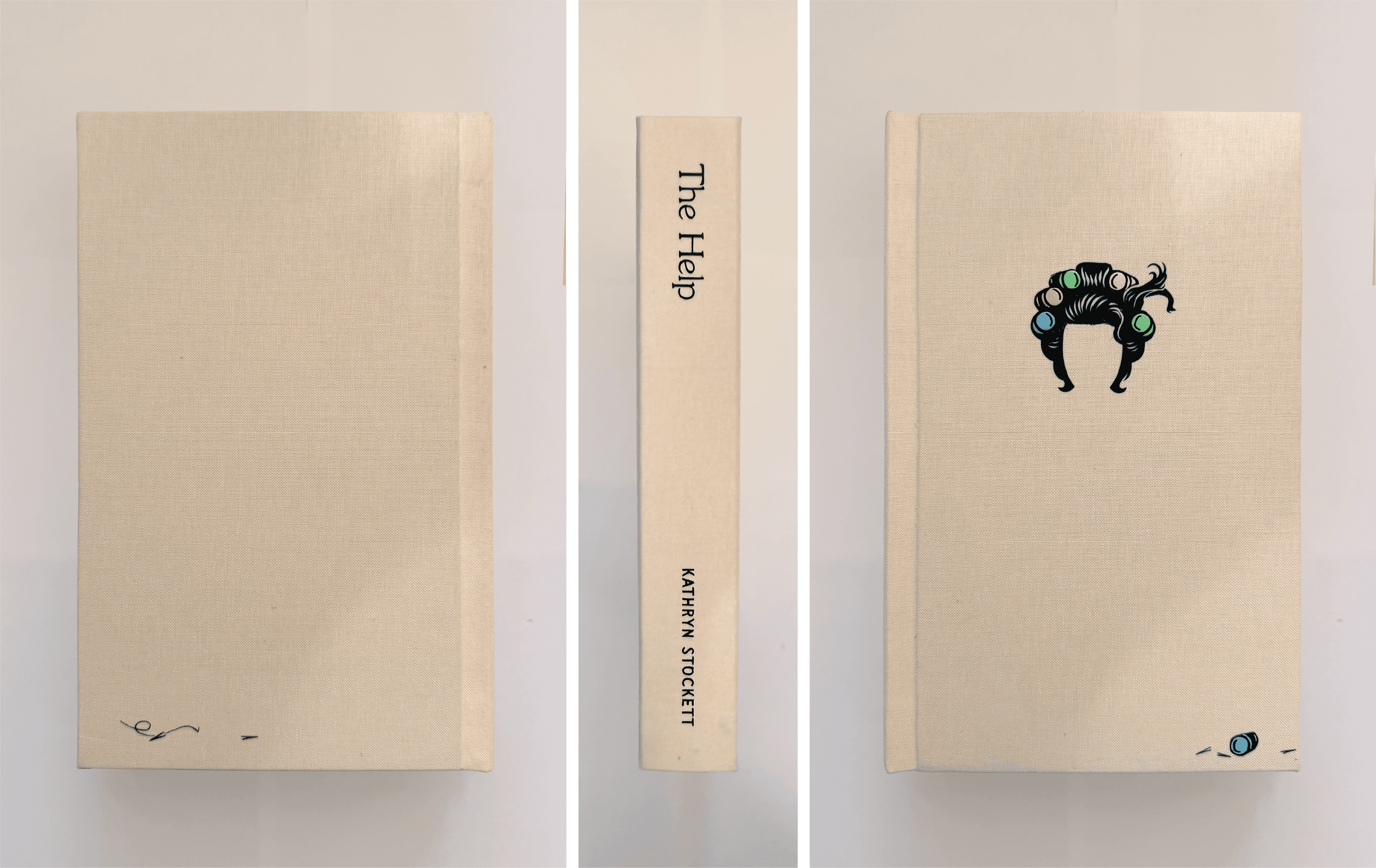
THE HELP KATHERINE STOCKETT
This cover is built on the language of mid-century beauty routines and domestic perfection: an otherwise perfect set of curls, but one roller has come undone, a chaotic bundle of hair breaking free — symbolic of the world order that the women are tearing down by telling their stories. Inside, champagne-gold endpapers and a pie illustration transform one of the novel’s funniest moments into something considerably sharper.
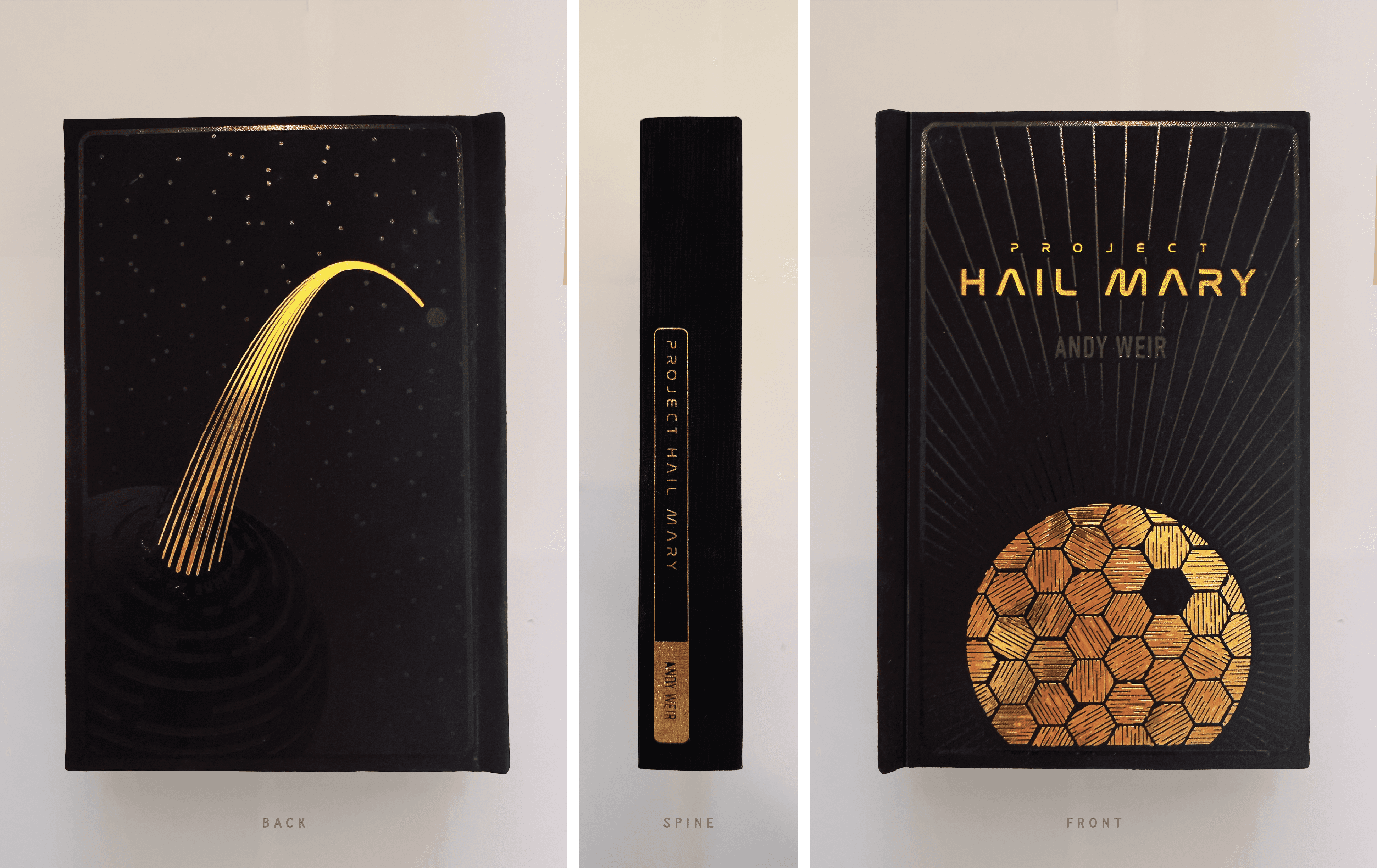
PROJECT HAIL MARY ANDY WEIR
Black and gold foil are used throughout the design to build scenes that feel as epic and isolating as the journey itself. On the front, radiating tunnel lines resolve into Rocky’s geometric wall structure, where a single open hexagon leaves his friendly hand waiting to be discovered in black foil — the moment an impossible scientific mission becomes an unlikely friendship. On the back, the Petrova Line stretches from planet to star across the darkness of space, turning one of the novel’s scientific concepts into both a visual motif and a symbol of impossible distance.
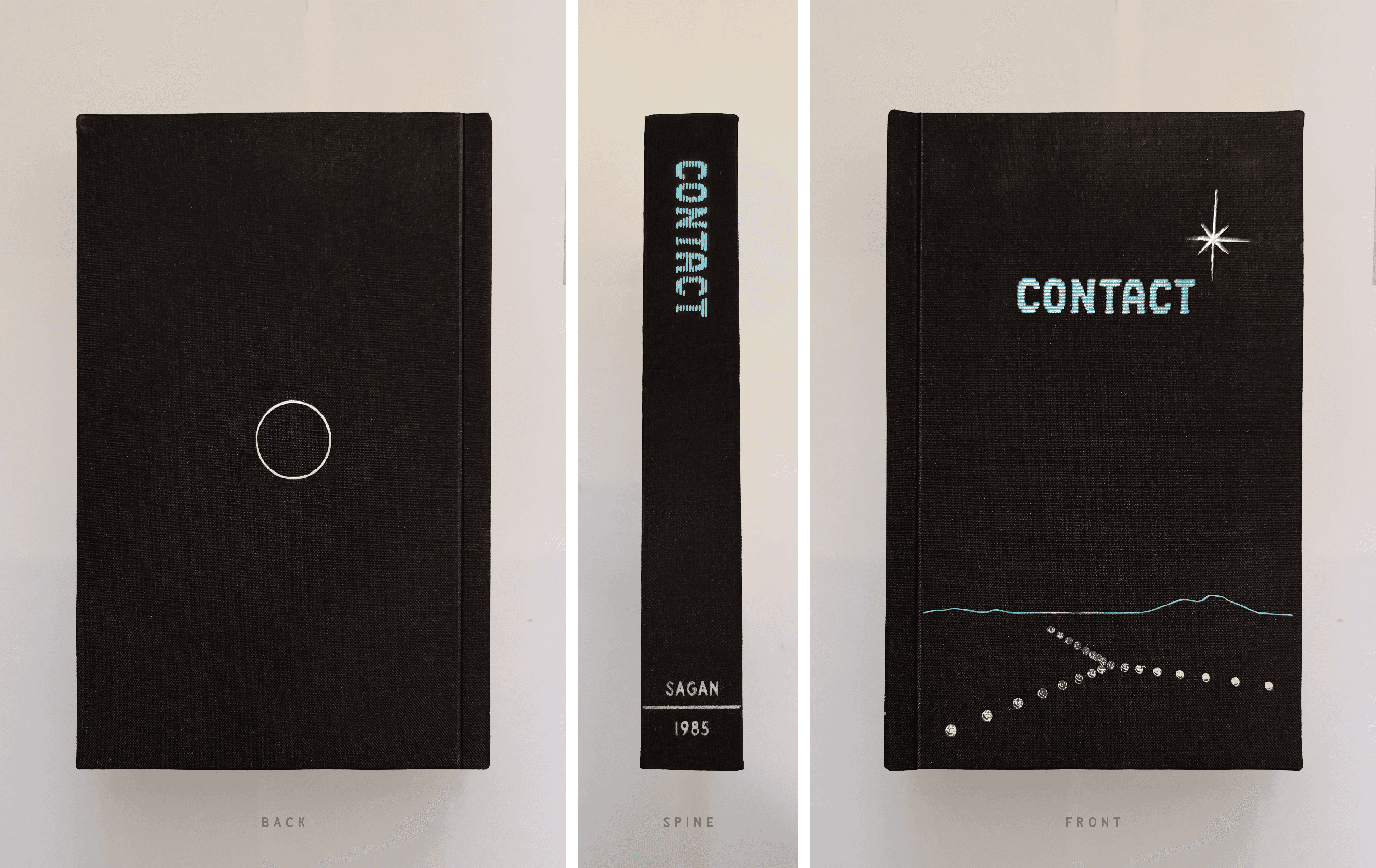
CONTACT CARL SAGAN
Two foil colors divide the design between science and wonder: silver for the mathematics and machinery of discovery, blue for the human interpretation layered on top of it. The front cover places the VLA dishes along the New Mexico horizon, aligned toward Vega beneath a title rendered in a custom CRT-inspired typeface. On the back, a single unresolved ring sits alone in space — abstract at first, but quietly loaded with meaning by the novel’s end.
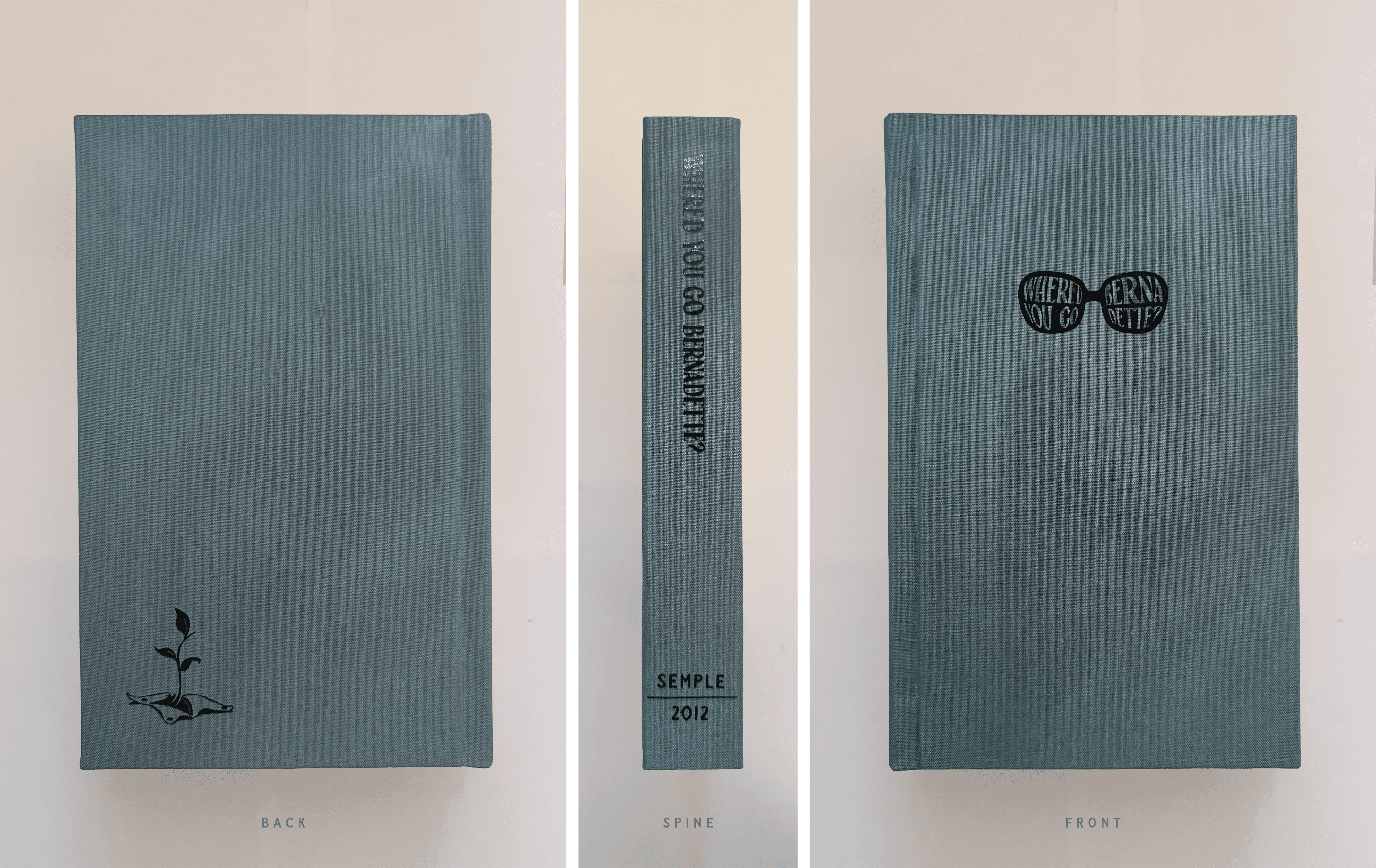
WHERE'D YOU GO BERNADETTE? MARIA SEMPLE
Inspired by the original book illustration, the front cover places the title within Bernadette’s oversized sunglasses — a playful but slightly distancing gesture that mirrors both her aloofness and the hidden emotional life beneath it. On the back, a blackberry vine grows through a section of carpet that has been cut open and stapled back into place around it: an oddly tender act of destruction and care that captures both Bernadette’s eccentricity and her need to let something living reach the light.

REMARKABLY BRIGHT CREATURES SHELBY VAN PELT
Inspired by the original book illustration, the front cover places the title within Bernadette’s oversized sunglasses — a playful but slightly distancing gesture that mirrors both her aloofness and the hidden emotional life beneath it. On the back, a blackberry vine grows through a section of carpet that has been cut open and stapled back into place around it: an oddly tender act of destruction and care that captures both Bernadette’s eccentricity and her need to let something living reach the light.
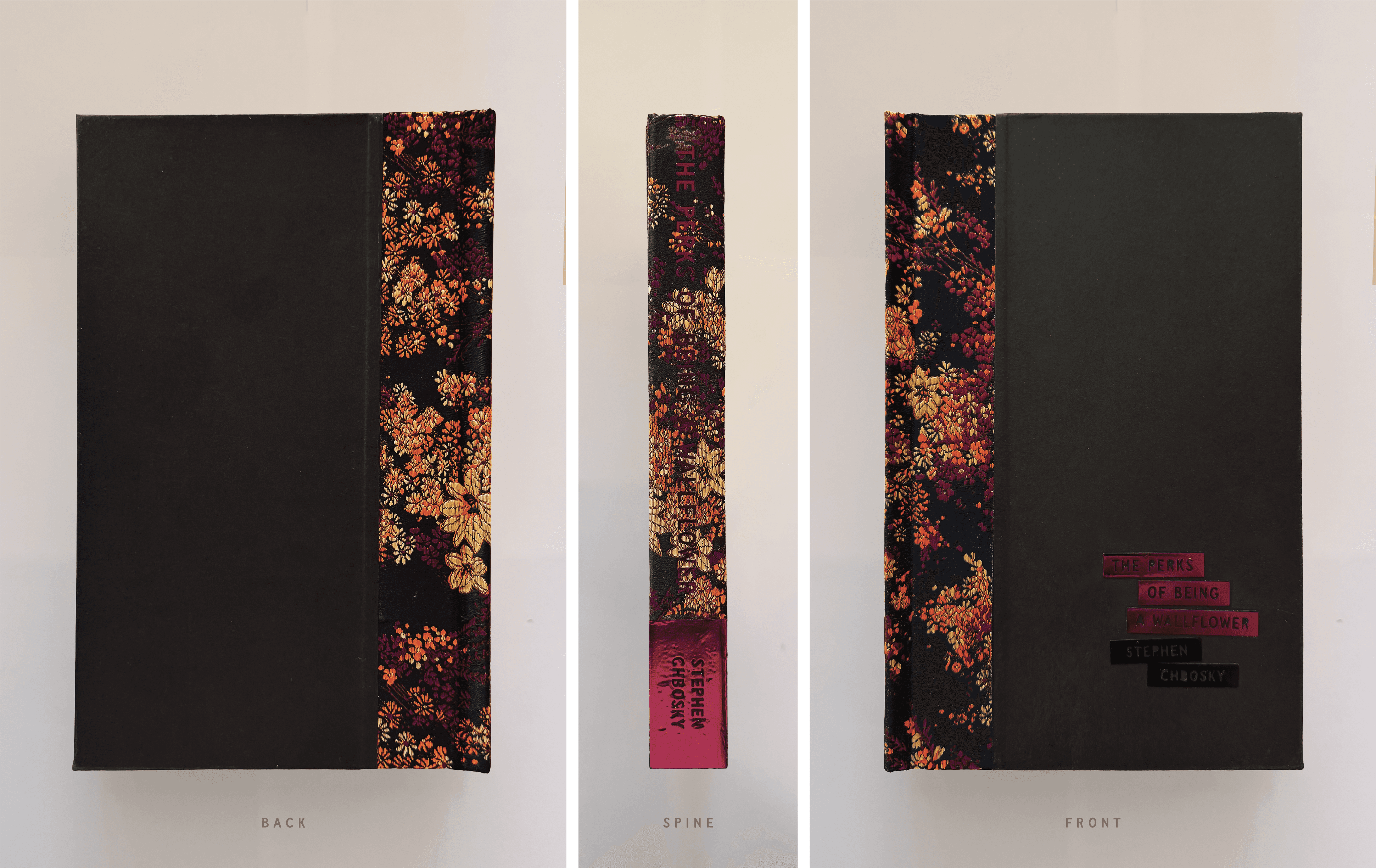
THE PERKS OF BEING A WALLFLOWER STEPHEN CHBOSKY
The design intentionally steps back, allowing the silk floral brocade itself to become the emotional gesture. Minimal label-inspired typography and restrained foil work mirror Charlie’s quiet observational role within the story, while the title nearly disappears into the busy floral spine — present, but blending softly into the background. The object was designed to feel personal and intimate rather than performative, like something assembled quietly by hand and carried closely for years.
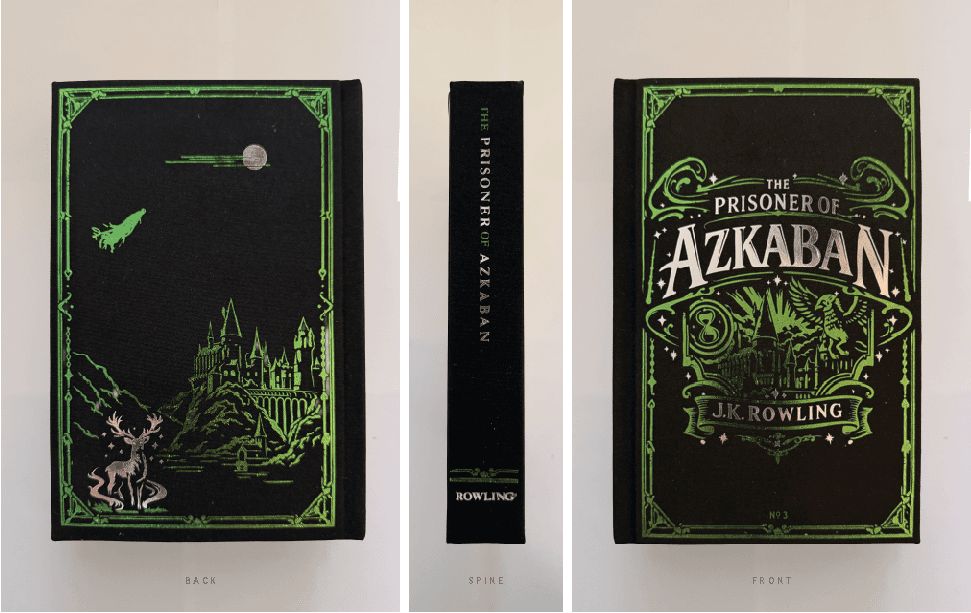
HARRY POTTER AND THE PRISONER OF AZKABAN JK ROWLING
This design leans more illustrative than interpretive, embracing the moment the Harry Potter series shifts into something darker, stranger, and more emotionally complex. Luminous green foil, Hogwarts silhouettes, and Patronus imagery aim to evoke the feeling of returning to a world that already exists vividly in the imagination of millions of readers. Rather than reimagining the story, the design acts as a loving tribute to its atmosphere — immersive, celebratory, and unabashedly magical.
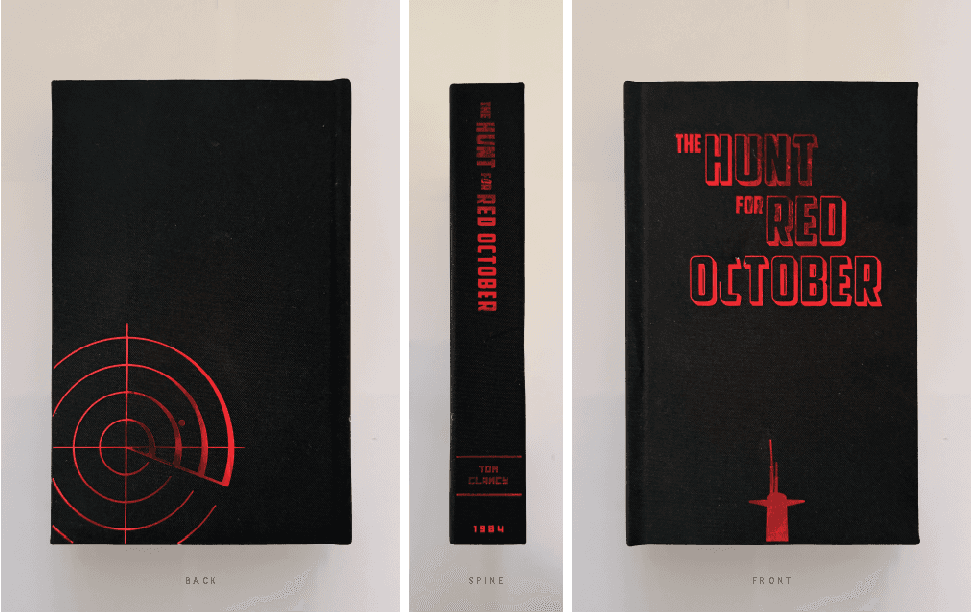
THE HUNT FOR RED OCTOBER TOM CLANCY
Black cloth, red foil, a sonar sweep on the front and the title bold on the back. The endpaper reads "The sea is always right." While perhaps a bit obvious, the design was made for a fan, and speaks to the tension of the book using its familiar imagery.